Winter Tires, Chauffeurs and Safe Airport Rides in Toronto

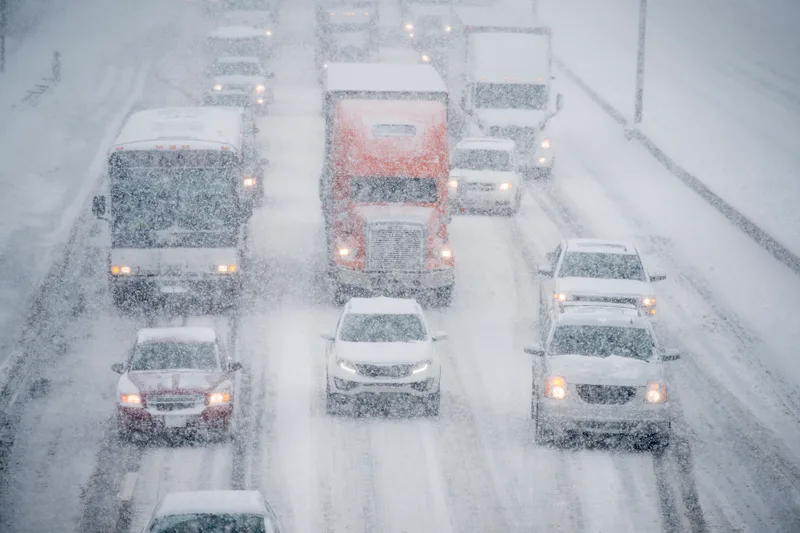
A winter airport transfer in Toronto combines everything that makes cold-season driving demanding: highway speeds on the 401 or the Gardiner, a hard deadline at the terminal, and departure times that often fall in the dark hours when roads are at their worst. Making that trip safe is not one decision but a stack of them — the tires under the car, the person behind the wheel, the time you leave, and a booking that flexes when weather bends your flight. This guide walks through each layer: what winter tires genuinely change on a cold highway, what professional chauffeurs do differently when the snow starts, and how to schedule and book a winter airport ride so the weather becomes an inconvenience instead of an emergency.
What winter tires actually change on an airport run
Winter tires are not a snow accessory; they are a cold-weather technology. Below roughly 7°C, all-season rubber hardens and grips less — on dry pavement, never mind slush — while winter compounds stay pliable and their deeper, sipe-heavy tread bites into snow and evacuates slush. The practical difference shows up exactly where an airport trip lives: stopping distances at highway speed, grip through long curves like the 427's ramps, and traction pulling away from a snowy standstill.
Ontario does not mandate winter tires, so the vehicle that shows up for a winter ride — whoever operates it — reflects choices someone made in October. It is a fair thing to care about as a passenger, and a fair question to ask of any service you ride with in January. Equipment is the floor of winter safety; the layers above it are the driver and the plan.
What a professional chauffeur does differently in winter
Winter crashes are rarely about ice alone — they are about speed and spacing choices made before the ice arrived. The professional difference is mostly invisible: longer following distances, earlier and gentler braking, speeds set to conditions rather than to the limit, and lane choices that avoid the slush channels between wheel tracks. A chauffeur who makes the Pearson run daily through a Toronto winter has seen every version of the 427 in snow and drives it with margins a once-a-year winter traveller does not have.
There is also a judgment layer: which corridor is cleared first after a squall, when the Gardiner's elevated deck is icing before the streets below it, when the 401 express lanes are moving but the collectors are not. That accumulated pattern-recognition — the kind that comes from 15+ years of serving airport travellers in this exact region — is what you are actually booking when the forecast is ugly. Your job reduces to being ready at the door; the road becomes someone else's profession.
Build the schedule for the weather, not the calendar
The most dangerous element of a winter airport trip is not the snow — it is the deadline you set against it. A schedule with no slack converts weather into pressure, and pressure into speed. The winter fix is structural: on snow-forecast days, move your departure earlier so the drive can be slow and unhurried and still make the check-in cut-off. Arriving with 40 spare minutes costs you a coffee; the alternative costs margin exactly when the road needs it most.
Booking mechanics help here. Book online at /ride/ at least 3 hours ahead — on storm days, book as soon as you know the flight — and use the emailed self-serve link to pull your pickup time earlier up to 12 hours out if the forecast worsens. Inside 12 hours, call (416) 200-5070 and dispatch adjusts it by phone. An SMS confirmation lands when you book and a reminder about 4 hours before pickup, which on a 5 a.m. winter departure is a genuinely useful nudge.
- Snow in the forecast: shift the pickup earlier — slack is the cheapest safety equipment there is
- Book as early as you can; edit up to 12 hours out via the self-serve link if conditions change
- Dress for the drive you might have, not the one you plan — and keep phones charged
- Be ready at the door at pickup time so none of your buffer is spent indoors
Flights bend in winter — your ride should bend with them
Half of winter airport stress is on the arrival side: inbound flights delayed by de-icing, diverted around systems, or landing early on tailwinds ahead of a front. A pickup booked for the scheduled time solves the wrong problem. Every airport pickup here is booked with the flight number and tracked — the pickup follows the actual landing, so a three-hour delay means the car is positioned three hours later, and nobody stands at the curb in a snowfall watching a phone.
For winter arrivals with vulnerable travellers — parents flying in for the holidays, kids in tow, anyone you would rather not have navigating Pearson alone in a parka — meet & greet is $65 on an airport pickup: the chauffeur waits inside the arrivals hall with a name sign and walks everyone to a warm car, handling the luggage. Child seats, if you need them, are free and installed — forward- or rear-facing.
The price does not slide with the storm
Winter weather does ugly things to on-demand pricing: the same storm that slows the roads spikes demand, and surge pricing charges you a premium for the privilege of a slower, riskier trip. A pre-booked all-in quote is the opposite arrangement — the total is fixed when you book, with base fare, HST, card fee and (on airport pickups) the $15.27 airport fee already inside. A snow-stretched drive costs more minutes and zero dollars. Pearson to downtown starts from $117.33 all-in for a sedan; to Barrie, one of the GTA's longest and most weather-exposed runs, from $223.22.
Many winter travellers step up to the SUV — from $173.20 on the Pearson–downtown run — for the extra cabin space, luggage room for winter gear, and the confidence of a larger vehicle in the snow; the full line-up is at /fleet/. Pay by card at booking (Apple Pay and Google Pay supported, charged only once the ride is confirmed) or cash to the chauffeur on the day — either way, the number never changes between the quote and the curb.
Frequently asked questions
Do winter tires really matter for a Toronto airport trip?
Yes. Below about 7°C, winter tire compounds grip meaningfully better than all-seasons — shorter stops and better traction at exactly the highway speeds and ramp curves an airport run involves. Ontario doesn't mandate them, so it's fair to care what's under the car you ride in.
What happens to my pickup if a storm delays my flight?
Nothing you need to manage. Every airport pickup is booked with the flight number and tracked, so the pickup time follows the actual landing — hours late or early, the car is positioned to the real arrival.
Should I book an SUV in winter?
Many travellers do — more cabin and luggage space for winter gear and the confidence of a larger vehicle. On the Pearson–downtown run the SUV starts from $173.20 all-in versus $117.33 for the sedan; compare the options at /fleet/.
How much earlier should I leave for a winter flight?
Enough that the drive can be slow and calm and still beat your check-in cut-off — on snow days, add a generous margin to your normal time. Slack is what keeps a winter drive unhurried, and unhurried is what keeps it safe.
Can I move my pickup earlier if the forecast gets worse?
Yes — use the emailed self-serve link to edit your booking up to 12 hours before pickup, or call (416) 200-5070 inside that window and dispatch will adjust it by phone.
Keep reading
 Seasonal
Winter Driving to Pearson from the Snow Belt: Squalls, Closures and the Leave-Earlier Math
Between Georgian Bay and Pearson sits some of the squalliest geography in southern Ontario. Here is how lake-effect snow actually behaves on the roads out of Collingwood, Wasaga Beach and Grey-Bruce, and how to build a departure time that survives it.
Read article Seasonal
The Cottage-Friday Problem: Flying Out of Pearson When Highway 400 Is Jammed
Summer Fridays turn Highway 400 into a slow parade of boat trailers, and somewhere in the middle of it is you, trying to make a flight. The timing windows, the pinch points that catch southbound traffic too, and what a fixed-price ride from cottage country costs.
Read article Seasonal
The March Break Flight Home: A Family Pickup Plan for Pearson
Families plan the March Break departure to the minute, then improvise the arrival. Here is the landing-day plan for coming home through a packed Pearson with exhausted kids: how the pickup tracks your flight, where the car seats come from, and what meet & greet buys you.
Read article
Ready when you are.
Get an upfront quote in under a minute — or call and we’ll sort it out for you.
Pickup within 3 hours? Call us — we’ll arrange it right away.