Winter Driving to Pearson from the Snow Belt: Squalls, Closures and the Leave-Earlier Math

Winter driving to Pearson from the snow belt is not the same problem as winter driving to Pearson from Mississauga. If you live in Collingwood, Wasaga Beach, Owen Sound or anywhere on the high ground between Georgian Bay and Highway 400, the hard part of your airport run is the first 40 to 60 kilometres — the stretch where lake-effect streamers can bury one township in an hour while the next one sits under blue sky. The 400 and 401 are plowed, patrolled provincial highways; the county roads and two-lane highways that get you to them are where flights are actually lost. This guide explains how squall weather works on the routes snow-belt travellers use, what the clear-day drive times and fares look like, and how to do the leave-earlier math so a January flight is boring instead of memorable.
Why the snow belt is its own winter problem
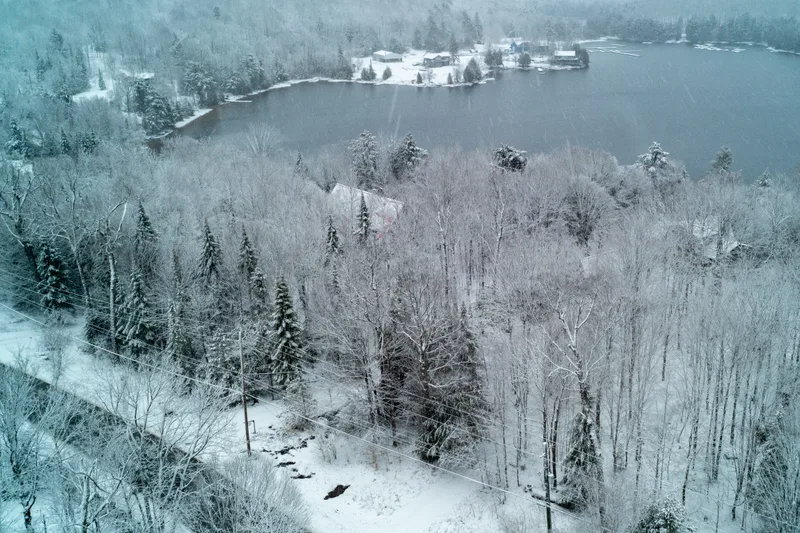
Lake-effect snow is manufactured locally. Cold northwest air crosses the open water of Lake Huron and Georgian Bay, picks up moisture, and dumps it in narrow bands on the first high ground it meets — which is exactly the country between Owen Sound, Collingwood and the top of Highway 400. The bands are often only a few kilometres wide, which is why Environment Canada issues snow squall warnings for specific corridors rather than whole regions, and why your neighbour's report from one concession over tells you almost nothing about the road you are about to take.
That behaviour matters for airport planning because a squall does not show up in the morning forecast the way a synoptic storm does. A system snowstorm gives you a day of warning and shuts down the whole GTA equally. A streamer can switch on over Highway 26 at 4 p.m., drop visibility to nothing for ninety minutes, and be gone by dinner. Planning a flight around that means planning for the possibility, not the forecast.
The squall corridors between you and Highway 400
Nearly every snow-belt airport run funnels through one of a handful of exposed stretches before it reaches the relative safety of the 400. Know which one is yours, because that is the segment your buffer exists for.
- Highway 26 between Collingwood and Stayner — flat, open and directly downwind of Georgian Bay; a classic streamer alley
- Highway 10 over the Dundalk highlands — some of the highest, snowiest terrain in southern Ontario on the Owen Sound and Markdale route south
- Highway 6/10 out of Owen Sound — squalls plus escarpment grades before you ever reach Chatsworth
- County Road 124 through Duntroon and Singhampton — the scenic route south is also the first to close
- Highway 89 and the run into the 400 at Cookstown — the last exposed leg for Wasaga Beach and Angus traffic
The leave-earlier math, worked out
Start from the clear-road numbers. Collingwood to Pearson is about 138 km and runs roughly 95 to 130 minutes depending on traffic. Wasaga Beach is about 120 km and 80 to 110 minutes. Owen Sound is about 170 km and anywhere from 130 minutes on an empty summer morning to three hours in ordinary winter conditions. Those are driving times, not door-to-gate times.
Now build the winter version. Double the time you allot to the local, two-lane portion of your route, because that is where a squall slows you to 40 km/h or stops you entirely. Add a flat 60 minutes of storm buffer on any day Environment Canada has a squall watch or warning anywhere along your corridor. Then add your airline's check-in window on top. For a 9 a.m. international departure out of Collingwood on a squally day, that arithmetic says wheels rolling by about 3:30 a.m. — which sounds extreme until the alternative is watching Highway 26 close from behind a snowplow at 6.
The one thing the math cannot fix is a full road closure. When the OPP shuts Highway 10 or 26, it reopens when it reopens. The only real defences are leaving ahead of the band, or routing around it — and both depend on someone actively watching the radar rather than just the windshield.
What a chauffeur changes on a squall day
A professional airport run out of the snow belt is not just someone else holding the wheel. The vehicle is winter-prepared, the chauffeur has driven these corridors all season, and the route decision — 26 to the 400, or south on 124, or the long way around a closed stretch — gets made with live road reports rather than hope. You ride in the back, checked in online, with your boarding pass and your blood pressure intact. Toronto Airport Limo has been doing these runs for 15+ years from a base five minutes off the airport grounds, so the Pearson end of the trip is home territory too.
The fares are flat and all-in, quoted before you commit. A sedan from Collingwood to Pearson is $315.16 all-in; Wasaga Beach is $273.72; Owen Sound is $386.89. Rides home from the airport run slightly higher — Collingwood is $332.76 by sedan, for example — because every airport pickup carries a $15.27 airport fee that drop-offs do not. Winter weather does not change the number: the quote you accept at /ride/ is the price, whether the trip takes two hours or four.
Booking it so the weather cannot unpick it
Book online at /ride/ with at least three hours of lead time — for a snow-belt winter trip, book days ahead and take the early slot you hope you will not need. Your confirmation email includes a self-serve link to view or edit the booking up to 12 hours before pickup, so if the forecast hardens you can pull your pickup time earlier without a phone call. You will get an SMS confirmation when you book and a reminder about four hours before pickup.
For the flight home, your chauffeur works from your flight number, so a weather-delayed arrival moves the pickup automatically. And if plans change inside the 12-hour window, the phone still works: (416) 200-5070, any hour — the service runs 24/7, including the February mornings nobody wants to drive in.
Frequently asked questions
How much earlier should I leave Collingwood for Pearson in snow squall season?
On a day with a squall watch or warning, plan on doubling the Highway 26 portion of the drive and adding a further hour of buffer on top of the normal 95-to-130-minute run — then add your airline's check-in window. It is common for a squall-day departure to leave four or more hours before you would in July, because the risk is a closed road, not just a slow one.
What happens if Highway 26 or Highway 10 closes while I am booked?
Your chauffeur is watching conditions before the pickup, not discovering them with you, and will route around a closure where an alternative exists — 124, 89 or the long way through Barrie. The flat quote does not change with the detour. If the whole corridor is impassable, you will know early enough to work the problem with your airline instead of finding out at a barricade.
Do you serve Owen Sound and Grey-Bruce in winter?
Yes — year-round, 24/7. Owen Sound to Pearson is $386.89 all-in by sedan, and the same trip runs every week of the winter. Long rural pickups simply need normal booking lead time: reserve online at /ride/ at least three hours ahead, or phone (416) 200-5070 and it is arranged directly.
Keep reading
 Seasonal
The Cottage-Friday Problem: Flying Out of Pearson When Highway 400 Is Jammed
Summer Fridays turn Highway 400 into a slow parade of boat trailers, and somewhere in the middle of it is you, trying to make a flight. The timing windows, the pinch points that catch southbound traffic too, and what a fixed-price ride from cottage country costs.
Read article Seasonal
The March Break Flight Home: A Family Pickup Plan for Pearson
Families plan the March Break departure to the minute, then improvise the arrival. Here is the landing-day plan for coming home through a packed Pearson with exhausted kids: how the pickup tracks your flight, where the car seats come from, and what meet & greet buys you.
Read article Seasonal
Christmas Week at Pearson: What Actually Changes and What to Book Ahead
Pearson does not just get busier at Christmas — the curbs, parking lots, transit schedules and booking calendars all behave differently for a stretch of about two weeks. A practical tour of what changes on the ground, and the short list worth locking in before the week arrives.
Read article
Ready when you are.
Get an upfront quote in under a minute — or call and we’ll sort it out for you.
Pickup within 3 hours? Call us — we’ll arrange it right away.