Toronto Summer Construction and Airport Travel Times: How to Plan
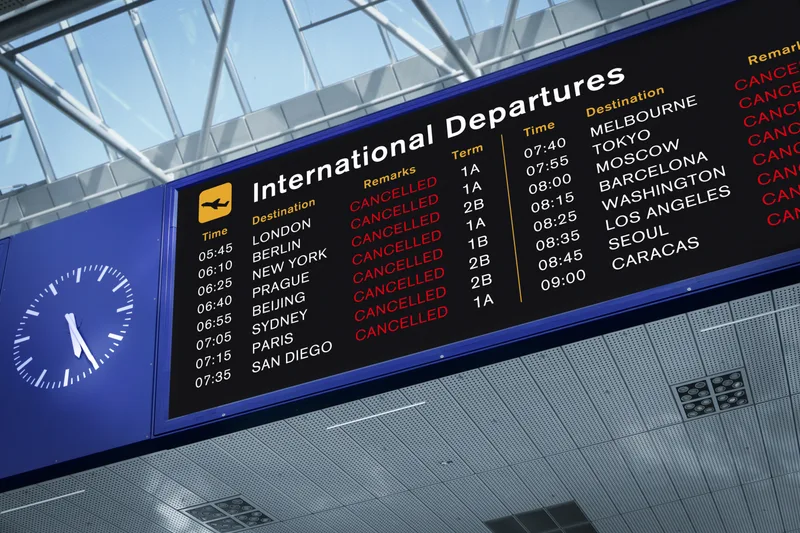
Toronto has two hard driving seasons, and only one of them involves snow. From late spring until well into fall, construction season narrows the exact corridors that airport trips depend on — the Gardiner Expressway, the 401, the 427 and the QEW — and travel times that look generous in April quietly stop being true by July. The planning rule is simple: in summer, treat every airport run as if it will hit at least one work zone, add buffer accordingly, and put the trip on a pre-booked, fixed-price ride so a slow drive costs you minutes but never money. Here is how construction season actually behaves, corridor by corridor, and how to schedule around it.
Why summer is Toronto's other difficult driving season
Road work in this climate is compressed into the warm months, so the repairs for the whole year land between May and October — resurfacing, bridge rehabilitation, lane-by-lane reconstruction on the elevated sections. Individually each project is minor; collectively they change the arithmetic of the city. A corridor that carries airport traffic at full width in winter may spend all summer a lane short, and a single closed lane does not slow traffic by one lane's worth — merges compound, and a 30-minute run becomes 50 at exactly the times of day flights cluster.
The other summer multiplier is that construction overlaps peak travel. July and August are heavy months at Pearson, weekends fill with events across the city, and the same warm weekend that draws crowds is when full closures tend to be scheduled. The result: summer airport delays are less dramatic than a snowstorm but far more frequent — and they catch precisely the travellers who planned around a spring-time drive estimate.
The corridors that decide your airport travel time
Nearly every Pearson trip in the GTA funnels through a handful of roads, and it pays to know which ones your route leans on. From downtown, it is the Gardiner west to the 427 — the corridor behind the familiar 25-to-45-minute range to the core, with construction pushing you toward the top of it. From midtown and North York, the 401 west and the Allen Road do the work; the 401 through the airport interchange is one of the busiest stretches of highway in North America even before cones appear. From the west, the QEW and 403 feed the 427; from the east, the 401's long approach or the DVP-to-401 hop.
Billy Bishop trips are the inverse case: the airport is downtown, so the drive is short but entirely dependent on surface streets and the Gardiner's downtown ramps — small closures move that needle more than you would expect. When summer work is heavy on the waterfront, allow city-street time even for a two-kilometre hop.
- Downtown ⇄ Pearson: Gardiner + 427 — plan for the high end of 25–45 minutes in work season
- North York / midtown ⇄ Pearson: 401 west or Allen-to-401 — the airport interchange is the pinch point
- Oakville / Burlington / Hamilton ⇄ Pearson: QEW/403 to the 427 corridor
- Durham ⇄ Pearson: the 401's full eastern run — the longest exposure to summer work zones
- Downtown ⇄ Billy Bishop: short, but sensitive to waterfront and Gardiner ramp closures
How much buffer to add in construction season
There is no single number, but there is a sound method: take your route's normal off-peak time, then add a summer margin that scales with how much highway you touch. Short hops that live on one corridor — Etobicoke or Mississauga to Pearson — need only modest padding. Cross-town runs that chain two or three corridors deserve the most respect: each segment can independently lose a lane, and their bad days multiply.
For departures, apply the buffer to your leave time, not your nerves: it is far better to spend twenty spare minutes airside in July than to watch a merge from a stopped car with a check-in cut-off approaching. For arrivals home, buffer matters less — which is one of summer's small mercies. Your pickup is booked against your flight number and tracked to the actual landing, so however the inbound flight and the highways behave, the car and the passenger arrive at the curb on the same schedule.
Weekend closures, events and the July–August overlap
The trap that catches otherwise careful travellers is the announced full closure — the weekend a highway section or major ramp shuts entirely for accelerated work. These are published in advance and then forgotten by everyone except the people stuck in the detour. If you have a summer weekend flight, it is worth two minutes to check whether your corridor is scheduled for one; if it is, re-route or leave dramatically earlier, because detoured highway traffic overwhelms the parallel arterials.
Layer the event calendar on top: summer weekends stack festivals, games and waterfront crowds onto a road network already down a few lanes. A Saturday evening departure from downtown in late summer is the single hardest airport-timing problem of the season. The fix is unglamorous — book the ride early, leave earlier than feels necessary, and let someone whose full-time job is Toronto traffic do the driving.
What a pre-booked, fixed-fare ride changes in summer
You cannot buffer away construction, but you can decide who absorbs it. On a metered ride, a slow crawl past a work zone runs up the fare in real time; on surge-priced apps, the same busy weekend that closed your ramp raises the price. A pre-booked all-in quote inverts that: the total — base fare, HST, card fee, and the $15.27 airport fee on pickups — is fixed when you book, so a 20-minute construction delay costs exactly $0. Pearson to downtown Toronto starts from $117.33 all-in for a sedan in either season; the instant quote at /ride/ shows your exact total.
The rest of the summer toolkit is standard practice here: professional chauffeurs who drive these corridors every day and route around the week's work zones; SMS confirmation when you book and a reminder about 4 hours before pickup; and the emailed self-serve link to adjust your pickup time up to 12 hours out — useful when you decide the night before that the Gardiner deserves an extra half hour. Book online 3+ hours ahead, or call (416) 200-5070 inside that window.
Frequently asked questions
Does the fare go up if construction makes the trip longer?
No. The quote is all-in and fixed at booking — a slow drive through a work zone changes your travel time, never your total. That is the core difference from a running meter or surge pricing.
When is construction season in Toronto?
Roughly May through October, peaking in high summer. That is when resurfacing and bridge work concentrate on the Gardiner, 401, 427 and QEW — the exact corridors airport trips use.
How much earlier should I leave for Pearson in summer?
Scale it to how much highway your route touches: modest padding for short west-side hops, the most for cross-town runs that chain the Gardiner, 427 and 401. From downtown, plan for the top of the 25-to-45-minute range and add margin for your check-in cut-off.
What about my pickup when I land — do I need to plan for traffic?
Your pickup is booked with your flight number and tracked, so the pickup time follows the actual landing. The chauffeur handles the routing; you only plan the departure side.
Can I change my pickup time if I decide to leave earlier?
Yes — every booking includes an emailed self-serve link to view or edit details up to 12 hours before pickup. Inside 12 hours, call (416) 200-5070 and dispatch adjusts it by phone.
Keep reading
 Seasonal
Winter Driving to Pearson from the Snow Belt: Squalls, Closures and the Leave-Earlier Math
Between Georgian Bay and Pearson sits some of the squalliest geography in southern Ontario. Here is how lake-effect snow actually behaves on the roads out of Collingwood, Wasaga Beach and Grey-Bruce, and how to build a departure time that survives it.
Read article Seasonal
The Cottage-Friday Problem: Flying Out of Pearson When Highway 400 Is Jammed
Summer Fridays turn Highway 400 into a slow parade of boat trailers, and somewhere in the middle of it is you, trying to make a flight. The timing windows, the pinch points that catch southbound traffic too, and what a fixed-price ride from cottage country costs.
Read article Seasonal
The March Break Flight Home: A Family Pickup Plan for Pearson
Families plan the March Break departure to the minute, then improvise the arrival. Here is the landing-day plan for coming home through a packed Pearson with exhausted kids: how the pickup tracks your flight, where the car seats come from, and what meet & greet buys you.
Read article
Ready when you are.
Get an upfront quote in under a minute — or call and we’ll sort it out for you.
Pickup within 3 hours? Call us — we’ll arrange it right away.