Snowstorm Heading to Pearson? Exactly How Much Earlier to Leave for YYZ in Winter
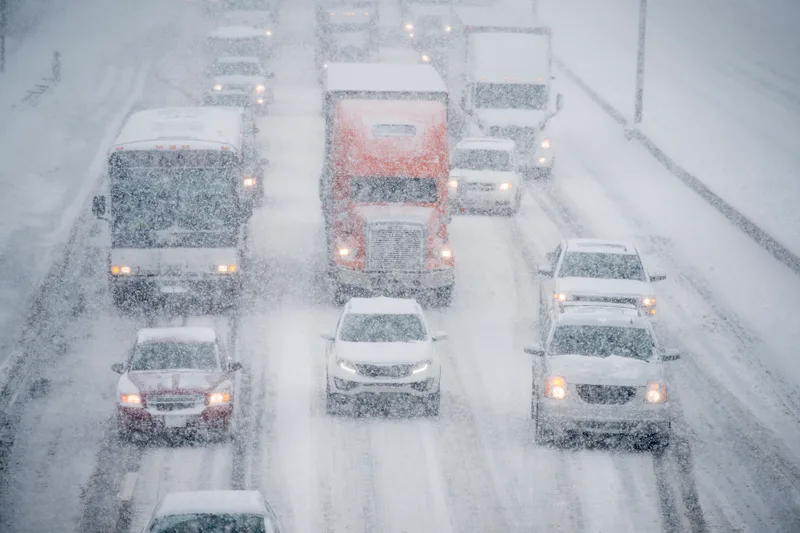
If there's snow in the forecast, the single most useful thing to know is this: how early to leave for Pearson airport in snow is a bigger question than when your flight boards. The storm doesn't cancel your flight — it just makes the drive the risky part. Runways get plowed on a schedule and planes still push back; the 401 in the dark with an inch of unplowed slush is where trips actually fall apart. So here's the plain rule of thumb up front, then the breakdown by conditions and distance so you can build a buffer you can trust.
The quick answer: add 60–90 minutes to your normal drive
During an active snow event, add 60–90 minutes on top of your normal, dry-day drive to Pearson (YYZ) — and that's before you touch your check-in cushion. From the 905 fringe (Barrie, Oshawa, Milton, north Newmarket) push that toward 90–120 minutes, because those highways plow later and you're on the road longer.
Think of it as three separate clocks stacked together: your dry-day drive time, your storm buffer, and the airline's own cushion. Keep them separate in your head so a slow crawl on the 427 doesn't eat into the two hours you needed inside the terminal.
- Dry-day drive time (door to Pearson curb) — your normal baseline
- Storm buffer: +60–90 min in the GTA core, +90–120 min from the 905 fringe
- Airline cushion: arrive 2 hours before a domestic flight, 3 hours international
- De-icing reality: even after you arrive, your plane may sit in the de-ice queue — that's the airline's clock, not yours
Active snowfall vs. post-storm cleanup — they're not the same
The buffer changes depending on where you are in the storm's life cycle, and travellers routinely get this backwards.
During active, heavy snowfall (2–4 cm/hour), roads are being covered faster than plows can clear them. Visibility drops, the 400-series highways slow to a crawl, and even short trips double in time. This is the +90 minute scenario, minimum.
The morning after is deceptively dangerous. The snow has stopped, the sun is out, and everyone assumes it's fine — but overnight melt refreezes into black ice, plows have pushed windrows across ramp entrances, and side streets in the 905 can stay unplowed for a full day. Give post-storm cleanup mornings +45–60 minutes, and treat any on-ramp or bridge deck as if it's glass.
- Active heavy snowfall (2–4 cm/hr): +90 min minimum — roads cover faster than plows clear them
- Post-storm morning: +45–60 min — black ice from overnight refreeze is the hidden risk
- Windrows: plows pile snow across ramp entrances even after the main lanes are clear
- 905 side streets can stay unplowed for a full day after the highways reopen
The 46 cm scenario: when the storm halves Pearson's departures
It's worth knowing what a genuinely historic storm looks like, because the GTA had one recently. In late January 2026, roughly 46 cm of snow fell at Pearson in a single day — a new one-day record that broke an 89-year mark, with the month's 88.2 cm becoming the snowiest in the airport's recorded history.
The operational effect was blunt: the record snowfall effectively cut Pearson's departure rate in half, with 560+ flights cancelled on the worst day and the airport planning a multi-day recovery.
Here's the counterintuitive takeaway. In a storm that severe, your flight may well be delayed or rebooked — but plenty of flights still operate, and the airline expects you to be there and checked in for the ones that do. Missing a departure because you couldn't reach the airport is on you; a weather cancellation is on the airline. Get to Pearson, get checked in, and let the flight status sort itself out from the warm side of security.
- ~46 cm in one day — a record that broke an 89-year mark for Pearson
- 560+ flights cancelled on the worst day; departure rate effectively halved
- Even so, many flights still operated — the airline expects checked-in passengers
- A weather cancellation is the airline's problem; a missed drive is yours
Distance matters more than usual: your buffer by zone
On a clear day, the difference between a 25 km and an 80 km trip to Pearson is time. In a storm, it's also risk exposure — every extra kilometre is another chance to hit an unplowed stretch, a stalled car, or a closed ramp. Scale your buffer to how far you're actually driving.
These build on top of your dry-day drive and your airline cushion — they are the storm buffer only.
- Nearby GTA (15–30 km — Etobicoke, central Mississauga, north Toronto): +45–75 min
- Mid-distance (30–55 km — Vaughan, Brampton, Oakville, central Toronto): +60–90 min
- Far (55–90 km — Oshawa, Milton, Newmarket, Burlington): +90–120 min
- Out of town (90 km+ — Barrie, Hamilton, Kitchener, Peterborough): plan for +2 hours and consider leaving the night before for an early flight
The 401 and 427 in a storm: where the drive actually goes wrong
Most trips to Pearson funnel onto the same pressure points, and in snow these are exactly where a buffer evaporates.
The 401 westbound through the 400/404 collector-express weave is the GTA's busiest stretch and among the first to gridlock when snow slows everyone to single-file. The 427 interchange and the airport ramps carry a lot of merging, elevated ramps and bridge decks — the surfaces that ice first and get least traction. Add early-winter darkness (sunset before 5 p.m. in December and January) and glare off falling snow, and you have the conditions that make experienced drivers white-knuckle it.
- Bridge decks and elevated ramps freeze before the road surface — the 427 and airport ramps are full of them
- The 401 express-collector transfers become choke points the moment traffic slows
- Salt loses effectiveness below roughly −12°C, so a cold-snap storm leaves roads slick even after plowing
- Winter tires (not all-seasons) are what actually keep you moving on the ramps — check what your own car is wearing before you commit to driving
When to stop driving and let a chauffeur take the wheel
There's a clear line where driving yourself stops being the sensible choice: a flight you can't afford to miss, an early or after-dark departure, an unplowed route from the 905, or a car on all-season tires. That's the moment to hand over the keys.
A professional chauffeur service removes the two things that make winter airport runs stressful — the driving and the timing. The vehicles run proper winter tires, the chauffeur has done the 401/427 in worse, and dispatch tracks your flight live, so if the storm pushes your departure, your pickup shifts with it rather than leaving you waiting in the cold or paying for a no-show. Fares are quoted flat and upfront — no meter creeping up while you sit in storm traffic, and no surge pricing on the day everyone needs a ride.
For a departure, an SUV or Premium SUV (up to 6) gives you winter-ready ground clearance and room for a family and its ski bags; a sedan is plenty for one or two travellers. As honest guidance, an all-in flat sedan fare to Pearson runs roughly $65–113 from the nearby GTA, $110–180 mid-distance, and $160–260 from farther out, with SUVs 30–60% above that — but the real number comes from an instant upfront quote. Get yours at our [instant quote](/#book), or see the full [Pearson airport limo service](/pearson-airport-limo-service/) and [airport pickups and drop-offs](/airport-drop-and-pickups-toronto-limo-service/). Flying out of the 905? There's a dedicated [Mississauga airport limo service](/mississauga-airport-limo-service/) too.
- Hand over the keys when: the flight is critical, it's dark or early, the route is unplowed, or you're on all-season tires
- Winter tires + a chauffeur who knows the 401/427 in bad weather
- Live flight tracking — your pickup shifts if the storm delays your departure
- Flat upfront quotes: no meter, no surge on the day everyone needs a ride
Frequently asked questions
How early should I leave for Pearson during an active snowstorm?
Add 60–90 minutes to your normal dry-day drive if you're in the GTA core, and 90–120 minutes from the 905 fringe like Barrie, Oshawa or Milton. That storm buffer sits on top of the airline's own cushion — arrive 2 hours before a domestic flight and 3 hours before an international one.
My flight is delayed by the storm — should I still leave early?
Yes. A weather delay or cancellation is the airline's responsibility, but only if you're checked in for the flight. Missing a departure because you couldn't reach the airport is on you. Get to Pearson, check in, and monitor the status from inside the terminal — plenty of flights still operate even when a storm halves the schedule.
Is it more dangerous to drive during the snow or the morning after?
Both, differently. Active heavy snowfall means low visibility and roads covered faster than plows can clear them — that's the +90 minute scenario. The morning after brings black ice from overnight refreeze and unplowed 905 side streets, so still add 45–60 minutes and treat every ramp and bridge deck as slick.
Why hire a chauffeur instead of driving myself in winter?
A chauffeur removes the driving and the timing risk. The vehicles run proper winter tires, the chauffeur knows the 401 and 427 in bad weather, and dispatch tracks your flight live so your pickup shifts if the storm moves your departure. Fares are flat and quoted upfront — no meter, no surge on the day everyone needs a ride.
Keep reading
- Seasonal
Winter Driving to Pearson from the Snow Belt: Squalls, Closures and the Leave-Earlier Math
Between Georgian Bay and Pearson sits some of the squalliest geography in southern Ontario. Here is how lake-effect snow actually behaves on the roads out of Collingwood, Wasaga Beach and Grey-Bruce, and how to build a departure time that survives it.
Read article  Seasonal
The Cottage-Friday Problem: Flying Out of Pearson When Highway 400 Is Jammed
Summer Fridays turn Highway 400 into a slow parade of boat trailers, and somewhere in the middle of it is you, trying to make a flight. The timing windows, the pinch points that catch southbound traffic too, and what a fixed-price ride from cottage country costs.
Read article Seasonal
The March Break Flight Home: A Family Pickup Plan for Pearson
Families plan the March Break departure to the minute, then improvise the arrival. Here is the landing-day plan for coming home through a packed Pearson with exhausted kids: how the pickup tracks your flight, where the car seats come from, and what meet & greet buys you.
Read article
Ready when you are.
Get an upfront quote in under a minute — or call and we’ll sort it out for you.
Pickup within 3 hours? Call us — we’ll arrange it right away.