Barrie & Simcoe County to Pearson Airport: The Highway 400 Guide to Making Your Flight
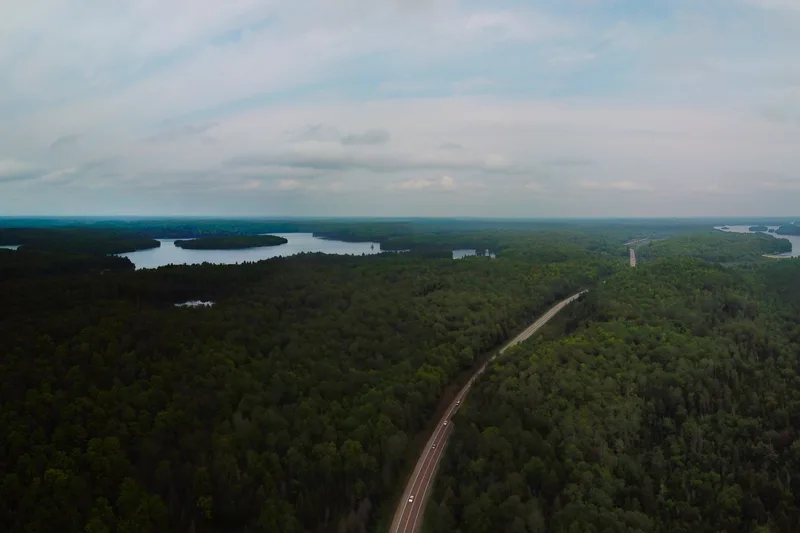
Getting from Barrie to Pearson airport is not a hard drive — it is a long one, and a long drive down a single corridor is exactly where flights get missed. There is really only one way south: Highway 400, straight down through Innisfil, Bradford, King and Vaughan, until it hands you off to the 401 or the 407 near the top of the GTA. On a good day it flows. On a Friday afternoon, a Sunday evening, or a February whiteout, that same open highway turns into the reason you are standing at a closed gate. From Barrie, budget 80–100 minutes to Pearson on a weekday morning, and know that the 400/401 merge near Vaughan is where the delay lives. This is the timing guide — when to leave, what to watch for, and how to decide whether to drive yourself or book a door-to-door ride.
The honest answer: how long Barrie to Pearson really takes
Barrie's south end to Toronto Pearson (YYZ) is roughly 90–100 km, almost all of it on Highway 400 southbound. In free-flowing conditions — think a Tuesday at 10am or the small hours of the morning — you can do it in about 70–80 minutes door to terminal. That is the number Google Maps shows you at midnight, and it is the number that gets people into trouble.
The realistic planning figure is 80–100 minutes on a weekday morning, and up to 110+ minutes if you hit a bad merge or an incident. The variability is not evenly spread along the route — it clusters in one place, which is the single most useful thing to understand about this drive.
- Distance: ~90–100 km, Barrie to Pearson terminals
- Off-peak drive: ~70–80 minutes
- Weekday morning planning figure: 80–100 minutes
- Bad day (incident, weather, peak merge): 120+ minutes
Where the delay lives: the 400/401 merge near Vaughan
The first 60-odd kilometres — Barrie through Innisfil, Bradford and King — usually move well. Highway 400 is wide and fast, and traffic thins between towns. The trouble starts as you approach the bottom of the 400 in Vaughan, where southbound traffic funnels toward the Highway 401 and the 407 interchanges. This is the pinch point. It is where GTA commuter volume, airport-bound traffic and construction all compete for the same lanes.
Your two realistic paths to Pearson from there are the 401 westbound or the 407 westbound. The 401 through the north end of Toronto is one of the busiest stretches of highway in North America and can crawl at peak. The 407 is a toll road, but on a tight morning it is often worth every dollar — it bypasses the worst of the 401 and can save 20–30 minutes when it counts. If you are self-driving with a flight to catch, the 407 is cheap insurance.
- The open 400 corridor is rarely the problem — the bottom is
- 401 westbound: free, but slow and unpredictable at peak
- 407 westbound: tolled, but often 20–30 min faster on a bad morning
- Build the interchange delay into your plan, not the open highway
The surge windows: Friday afternoons and Sunday evenings
Two windows reliably punish Simcoe County travellers. The first is Friday afternoon and early evening, roughly 2pm to 7pm, when cottage-country and weekend traffic pours north out of the GTA — and southbound is heavier too. The second is Sunday evening, when everyone who went north for the weekend comes back down the 400 at once. If your flight departs during or just after one of these windows, treat the drive time as its worst case, not its average.
Weekday rush hours (roughly 6:30–9:30am and 3:30–6:30pm) also thicken the Vaughan interchange. A 6am departure actually beats the morning rush — but only if you have cleared Vaughan before it builds. Leave late and you drive straight into it.
- Friday 2–7pm: weekend exodus, plan for the worst case
- Sunday evening: heavy southbound return traffic
- Weekday 6:30–9:30am and 3:30–6:30pm: interchange congestion
- Long-weekend Fridays and holiday Mondays: add a further buffer
Winter on the open 400: the whiteout factor
The same open, exposed highway that makes the 400 fast in summer makes it dangerous in winter. The stretch south of Barrie runs through flat, wind-swept farmland with little to break a squall coming off the fields. Simcoe County sees genuine whiteout and blowing-snow conditions that can drop visibility to near zero in minutes and close lanes entirely. This is not ordinary city-snow driving — the 400 near Barrie has a real reputation for multi-vehicle pileups in winter squalls.
In winter, your buffer is not a nice-to-have; it is the plan. Add 30–60 minutes from November through March, check the forecast and OPP road reports before you leave, and never assume the road that was clear this morning is clear now. This is also the season where a professional chauffeur who drives the corridor daily earns their keep — they know which conditions mean leave earlier, and they are not making that call for the first time in the dark with a flight on the line.
- Open farmland south of Barrie = squall and whiteout risk
- Add 30–60 minutes November–March
- Check the forecast and OPP reports before departure
- Winter squalls can close the 400 with little warning
The leave-by math for a 6am US-bound flight
A 6am flight to the US is the hardest case, because US-bound passengers clear customs and pre-clearance at Pearson (Terminal 1), which means being at the airport earlier than for a domestic or transatlantic trip. Work backwards. For a 6am US departure, plan to be at the terminal by about 4am — that is roughly two hours ahead to cover pre-clearance, security and bag drop.
From Barrie, a 4am arrival at 80–100 minutes drive time means rolling out of your driveway around 2:15–2:30am. The upside: at that hour the 400 is empty and the Vaughan interchange is quiet, so your drive is closer to the fast end of the range. The risk is not traffic — it is fatigue and, in winter, road conditions on a dark, cold highway. That trade-off is precisely why many Simcoe County flyers hand the pre-dawn drive to someone else.
- 6am US flight → be at Terminal 1 by ~4am (pre-clearance)
- Barrie departure: leave by ~2:15–2:30am
- Overnight roads are empty — but dark, cold and fatiguing
- For domestic/international, 90 min ahead is usually enough — confirm with your airline
Drive-and-park or book a ride? The real trade-off
For a one- or two-night trip, self-driving and parking at Pearson can pencil out. For a week or longer, the maths shifts: airport parking adds up fast, and you are leaving your car exposed to a week of weather while paying for the privilege. Against that, a flat, all-in return fare with a door-to-door ride starts to look like the sensible choice — no parking, no 2am solo drive, no scraping ice off the windshield when you land back at Pearson exhausted.
As a rough guide, a one-way sedan fare from the Barrie/Simcoe area to Pearson typically falls in the higher out-of-town band given the distance; an SUV or Premium SUV runs meaningfully above that, and the Sprinter Van van higher again for larger groups. These are ranges, not quotes — the real number comes from an instant upfront quote, flat and all-in with HST included, no meter and no surge. If you would rather skip the drive entirely, get an instant quote at /#book or see the Barrie-area options on the Toronto airport limo service page. Airport pickups on your return add live flight tracking and a meet-and-greet inside arrivals, so your chauffeur is waiting even if you land late.
- Short trip: self-park may win
- Week-plus trip: parking cost + weather risk favour a booked ride
- Flat, all-in upfront quote — no meter, no surge
- Return pickups include flight tracking and meet & greet inside arrivals
- Get your exact number at /#book
Frequently asked questions
How long does it take to drive from Barrie to Pearson airport?
Plan for 80–100 minutes on a weekday morning. Off-peak it can be 70–80 minutes, but a bad merge near Vaughan, an incident, or winter weather can push it past two hours. Always plan for the worst case when a flight is on the line.
What time should I leave Barrie for a 6am flight to the US?
For a 6am US departure you want to be at Terminal 1 by about 4am to clear US pre-clearance and security. At an 80–100 minute drive time, that means leaving Barrie around 2:15–2:30am. Roads are empty at that hour, so the drive itself is usually quick.
Is it better to drive and park or book a car to Pearson?
For a night or two, parking can make sense. For a week or more, parking costs and leaving your car in the weather often tip the balance toward a flat-rate door-to-door ride — especially in winter, when a professional chauffeur handles the 400 for you. Get an instant upfront quote at /#book to compare.
Is Highway 400 dangerous in winter?
The open, exposed 400 south of Barrie is prone to whiteout and blowing-snow conditions off the surrounding farmland, and it has a real reputation for winter squall pileups. From November through March, add 30–60 minutes, check OPP road reports before leaving, and consider letting a chauffeur who drives the corridor daily take the wheel.
Keep reading
 GTA Travel
Kitchener-Waterloo to Pearson Airport: Every Way to Get There
Four realistic ways to cover the 90 km between KW and Pearson — drive and park, ride the rails through Union, fly out of Waterloo's own airport, or book a flat-rate car — and which one fits which trip.
Read article GTA Travel
London to Pearson Airport: Train, Shuttle, Drive or Car Service?
At 175 km, London to Pearson is a half-day commitment however you slice it. The deciding factor isn't the mode — it's your departure time. Here's how each option holds up.
Read article GTA Travel
Niagara Falls to Pearson Airport: Every Way Up the QEW
Ending a Falls trip or flying out as a Niagara local? Here's every way to cover the 125 km to Pearson — and the two skyways, wind days and summer Sundays that decide how long it takes.
Read article
Ready when you are.
Get an upfront quote in under a minute — or call and we’ll sort it out for you.
Pickup within 3 hours? Call us — we’ll arrange it right away.