Waterloo Region to Pearson in Winter: KW & Cambridge Drivers' Survival Guide to the 401
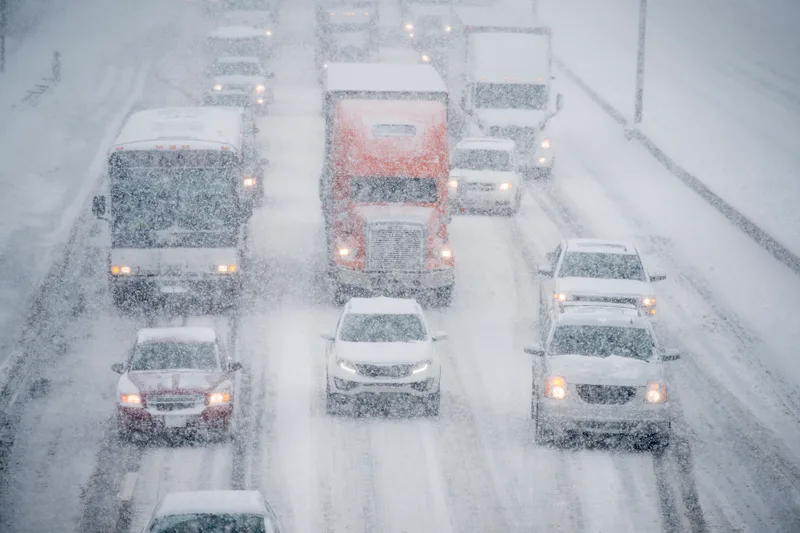
Ask anyone who drives the Waterloo-to-Pearson airport run in winter and you'll hear the same thing: the trip is either easy or it's a nightmare, with very little in between. On a clear day the roughly 87 km from Kitchener, Waterloo, or Cambridge to Toronto Pearson (YYZ) takes 60 to 75 minutes. In a snow squall, the same stretch of Highway 401 through Cambridge and Milton can crawl past two hours — or shut down entirely behind a multi-vehicle pileup. If you have a flight to catch, that gap is the whole problem. This guide covers the real corridor, the specific piece of the 401 that goes bad first, how much earlier to leave, and an honest look at your options: drive yourself, take a shuttle, ride GO, or book a professional winter chauffeur.
The honest answer: 60–75 minutes clear, past 2 hours in a squall
Under normal conditions, Kitchener-Waterloo to Pearson is about 50 to 75 minutes and Cambridge is a touch closer to the airport since it sits at the eastern edge of the region. The drive is almost entirely highway: Highway 8 east out of Kitchener onto the 401, then the 401 east through Cambridge, Milton, and Mississauga to the Pearson exits.
Winter changes the maths completely. Environment and Climate Change Canada regularly issues heavy-snow and blowing-snow statements for exactly this corridor, and when a squall sets up you can lose 45 minutes to an hour on top of the clear-day time — assuming the highway stays open at all. The safe planning assumption in January and February is not the 60-minute best case. It's the two-hour bad case.
- Clear day KW/Cambridge to Pearson: roughly 60–75 minutes, ~87 km
- Light snow or slush: add 30–45 minutes
- Active snow squall or a collision ahead: 2 hours-plus, or a full closure with no timeline
Why the Cambridge-to-Milton stretch of the 401 is the weak point
The piece of the route that fails first is the open, exposed run of the 401 from around Cambridge east through Milton. This section crosses flat farmland with few windbreaks, so lake-effect and squall snow blowing off the surrounding fields produces sudden whiteouts — you can be in clear sky one moment and zero visibility the next.
This is not hypothetical. During winter storms the westbound 401 near Cambridge and the eastbound 401 around the Guelph Line and Milton have both been closed for hours at a time because of multiple collisions in poor visibility. When one truck loses control in a whiteout here, the highway can back up or close in both directions, and there is no quick parallel route that handles that traffic. If you're heading to a flight, a closure on this stretch is the scenario that actually makes people miss departures.
- Open, wind-exposed farmland = sudden squall whiteouts
- Historically closes near Cambridge (westbound) and Guelph Line/Milton (eastbound) in storms
- Few real detours — Highway 7 or side roads add significant time and get slick too
How much earlier to leave in winter
The single most useful habit is to stop planning backward from the best-case drive time. Build your winter departure around the bad case and treat any time you gain as a buffer at the gate, not a reason to have left later.
A practical rule for the Waterloo-to-Pearson winter run: leave enough to be at the terminal three hours before an international flight and two hours before a domestic one, then add at least an extra 45 to 60 minutes of road buffer on top on any day with snow in the forecast. Before you go, check Ontario 511 for live 401 conditions and camera feeds so you know whether the Cambridge-Milton stretch is already backing up.
- Check Ontario 511 (live cameras + closures) before leaving Kitchener, Waterloo, or Cambridge
- Add 45–60 minutes of winter road buffer beyond your normal plan
- Aim to reach the terminal 3 hours ahead (international) / 2 hours (domestic)
- Keep a charged phone, warm layers, and your airline app for rebooking, just in case
Your four ways to get there — and how each holds up in snow
There are really four ways to make this trip, and winter separates them fast.
Drive yourself and park. Total flexibility, but you own all the risk: your winter driving, your tires, and days of YYZ parking fees while you're away. In a squall you're the one making whiteout decisions on the Milton stretch, tired and watching the clock.
Landline shuttle. Landline runs scheduled coach service between the Region of Waterloo (YKF) area and Pearson, which is a genuinely useful, lower-cost option. The trade-off is fixed schedules and shared stops — in bad weather the coach faces the same closed highway you would, with less ability to adapt, and a missed connection means the next scheduled departure.
GO Transit. GO connects the region toward Toronto, but reaching Pearson usually means a transfer (typically via the Kitchener line and onward connections or the UP Express from the city), which turns a one-seat trip into a multi-leg journey with luggage — slow and cumbersome on a storm day.
Professional chauffeur. A dedicated car and a driver who runs the 401 in winter for a living, on a flat upfront quote, with your pickup timed to your flight.
- Self-drive: most flexible, but all the winter risk and days of parking fees are yours
- Landline shuttle: affordable and scheduled, but shares the same highway and can't adapt
- GO Transit: usually needs a luggage-heavy transfer to reach Pearson
- Chauffeur: door-to-door, timed to your flight, on a flat upfront quote
When a professional winter driver is genuinely worth it
A chauffeur isn't the right answer for every trip — but for the Waterloo-to-Pearson run in winter, the case is stronger than most people assume. You're paying for judgement on the exact stretch of road that goes bad: a driver who watches the forecast and Ontario 511, leaves the buffer for you, and knows when the Cambridge-Milton section is worth waiting out versus rerouting.
With Toronto Airport Limo you get a flat, all-in quote agreed before the trip — no meter and no surge when a storm spikes demand — plus live flight tracking so your pickup adjusts if your inbound is delayed, and meet-and-greet inside arrivals on the way home so you're not standing at the curb in the cold. For a Kitchener, Waterloo, or Cambridge pickup, the fleet ranges from a Sedan for one or two travellers up to an SUV or Premium SUV and the Sprinter Van van for families, ski gear, or a full crew.
As a rough guide, a one-way sedan on this longer, out-of-region route typically lands in the higher band (the KW/Cambridge to Pearson distance sits at the far end of the GTA), with SUVs running meaningfully above that — but every trip is quoted flat and upfront, so the real number always comes from an instant quote, never a meter.
- Flat upfront quote — no meter, no winter surge pricing
- Live flight tracking + meet-and-greet inside arrivals
- Professional chauffeurs who drive the 401 corridor year-round
- Sedans, SUVs, and an 11-passenger Sprinter for groups and gear
Book ahead — and give the quote a few hours' lead
Winter is the season to book early, not to improvise. Reserving ahead locks in your car and your timing before a storm system shows up in the forecast, and it means one less decision to make when the snow actually starts.
You can get an instant, flat quote online for a Kitchener, Waterloo, or Cambridge pickup — the online quote works best with about three hours' lead time, so if you're inside that window on the day, just call and a dispatcher will sort it out.
- Get an upfront quote for your date and vehicle at /#book
- Prefer a person? Call (416) 200-5070 or toll-free 1-877-200-5070, 24/7
- Booking inside 3 hours of pickup — call rather than quoting online
Frequently asked questions
How long does it take to drive from Kitchener-Waterloo to Pearson in winter?
On a clear day, plan on 60 to 75 minutes for the roughly 87 km run via Highway 8 and the 401. In winter, add 30 to 60 minutes for snow and slush, and be ready for well over two hours — or a full closure — if a snow squall or collision hits the Cambridge-to-Milton stretch of the 401. Build your departure around that bad case.
Which part of the 401 is most dangerous in winter on this route?
The open, wind-exposed stretch from around Cambridge east through Milton. It crosses flat farmland with few windbreaks, so blowing snow creates sudden whiteouts, and this section has repeatedly closed for hours during storms because of multi-vehicle collisions in poor visibility. Check Ontario 511 for live conditions before you leave.
Is a chauffeur worth it over the Landline shuttle or GO Transit?
For a winter airport run, often yes. A shuttle and GO both face the same closed highway with fixed schedules and, for GO, luggage-heavy transfers to reach Pearson. A private chauffeur gives you a flat upfront quote, timing built around your flight, flight tracking, and a driver who runs the 401 in winter for a living — worth it when missing your flight isn't an option.
How far ahead should I book a winter airport transfer from Waterloo Region?
Book as early as you can so your car and timing are locked in before a storm appears in the forecast. Online quotes work best with about three hours' lead time; if you're inside that window, call (416) 200-5070 and a 24/7 dispatcher will arrange it.
Keep reading
 GTA Travel
Kitchener-Waterloo to Pearson Airport: Every Way to Get There
Four realistic ways to cover the 90 km between KW and Pearson — drive and park, ride the rails through Union, fly out of Waterloo's own airport, or book a flat-rate car — and which one fits which trip.
Read article GTA Travel
London to Pearson Airport: Train, Shuttle, Drive or Car Service?
At 175 km, London to Pearson is a half-day commitment however you slice it. The deciding factor isn't the mode — it's your departure time. Here's how each option holds up.
Read article GTA Travel
Niagara Falls to Pearson Airport: Every Way Up the QEW
Ending a Falls trip or flying out as a Niagara local? Here's every way to cover the 125 km to Pearson — and the two skyways, wind days and summer Sundays that decide how long it takes.
Read article
Ready when you are.
Get an upfront quote in under a minute — or call and we’ll sort it out for you.
Pickup within 3 hours? Call us — we’ll arrange it right away.