Flying to the US from Pearson? US Preclearance Explained (and Why You Need to Leave Earlier)
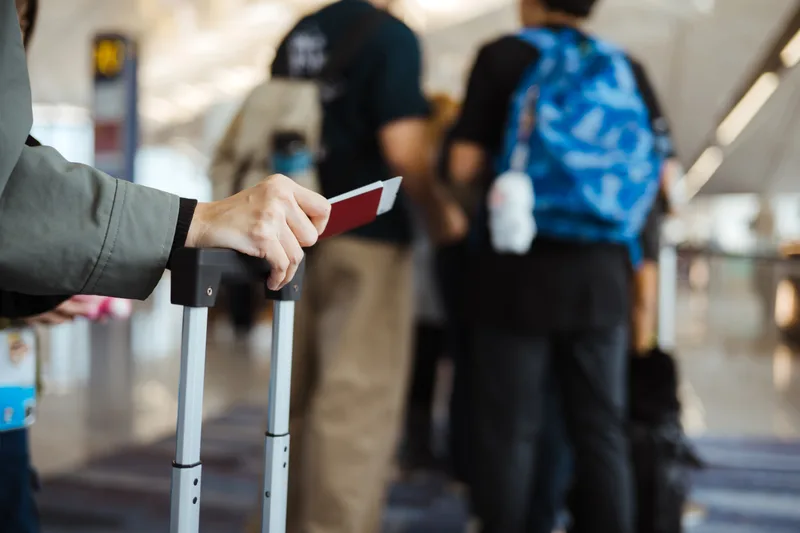
If you've booked a US-bound flight out of Toronto Pearson, here's the thing that surprises almost everyone the first time: at Pearson you go through US preclearance — full US customs and immigration — before your flight, in Toronto, not on the other side. That's what "Pearson US preclearance customs before flight" really means. Instead of joining a customs queue when you land in New York, Chicago or Orlando, you clear US Customs & Border Protection (CBP) right here, walk into a US-domestic departures area, and step off the plane in America like any other domestic passenger. It's a genuine convenience — but it also means your morning is tighter and less forgiving than a normal international departure, so you need to leave home earlier. Here's exactly how it works and how to plan around it.
What US preclearance at Pearson actually is
Toronto Pearson is one of a handful of airports outside the United States where US Customs and Border Protection operates on Canadian soil. When you fly from Pearson to any US destination, you complete the full US entry process — passport control, customs, and any secondary questions — inside the terminal before you board.
Once you're precleared, you're funnelled into a sealed US-departures concourse and treated, for the rest of the journey, as a domestic US passenger. The practical upshot is simple: you land in the US and walk straight off the aircraft to baggage claim or your connection. No customs hall, no immigration line, no re-clearing on arrival.
- You clear US customs and immigration in Toronto, before your flight — not after landing.
- You arrive at your US airport as a domestic passenger and skip the arrivals customs queue.
- Both Terminal 1 and Terminal 3 at Pearson have US preclearance facilities.
- Connecting onward in the US is faster because you're already cleared.
Why preclearance means leaving home earlier
Preclearance is essentially a second checkpoint stacked in front of your flight. On a normal Canada-to-Canada or Canada-to-Europe departure, you clear security and you're at your gate. On a US departure you clear regular airport security AND the US border — and the border line is unpredictable, spiking hard at peak morning and late-afternoon banks when several US flights push at once.
Because of that extra layer, US flights are the one category where the standard 'arrive two hours early' advice genuinely isn't enough on a busy day. Airlines and the airport routinely advise budgeting more time for US-bound travel, and the preclearance hall is exactly why.
- Budget about 2.5 to 3 hours before a US departure, versus the usual 2 for domestic/international.
- Peak preclearance waits hit early morning (roughly 5–8 a.m.) and late afternoon.
- Long weekends, March break and summer Fridays are the worst — pad even more.
- If preclearance backs up, you can miss the flight even though you're 'in the airport' — the border is landside of your gate.
Early flight? Mind the 3:00 a.m. opening times
The other trap is very early departures. The checkpoints are not open around the clock. CATSA (the airport security screening) at Pearson typically opens around 3:00 a.m., and US preclearance opens a little later, around 3:30 a.m. If your US flight leaves at, say, 6:00 a.m., there's a real crush the moment the doors open, because everyone on the first bank of US flights arrives at once.
For a first-flight-of-the-day US departure, being there right at open is smart — but 'open' is 3-ish a.m., which means leaving home in the dead of night. This is precisely where a pre-arranged, punctual pickup earns its keep: no waiting on a rideshare that may not show at 3 a.m., no self-parking shuttle, just a chauffeur at your door on time. Get an upfront quote for that early run before you book anything else.
- CATSA security screening at Pearson typically opens around 3:00 a.m.
- US preclearance opens a little later, around 3:30 a.m.
- First-bank US flights create an instant crush right at opening — arrive as it opens.
- A 3 a.m. departure from home is far more reliable with a pre-booked chauffeur than a rideshare.
NEXUS and Mobile Passport can save you the worst of the line
If you cross the US border even a couple of times a year, a NEXUS card is the single best time-saver at Pearson. NEXUS members use dedicated kiosks and lanes at preclearance and typically move through in a fraction of the time — often the difference between a five-minute clear and a forty-minute one on a busy morning.
Travellers without NEXUS should still look for the CBP kiosks and check whether the Mobile Passport / CBP app options are available for your trip, which can shave time versus the full manual counter. Whatever lane you're in, the golden rule holds: the earlier in the morning bank you arrive, the shorter the wait.
- NEXUS: dedicated preclearance lanes and kiosks — worth it for frequent US flyers.
- Have your passport and any visa/ESTA/travel-authorisation sorted before you go — issues get resolved at the border, and that's on your clock.
- Even with fast lanes, arrive early; a missed connection isn't recoverable once boarding closes.
How to build a stress-free US departure morning
The move is to remove every variable you can control so the only wildcard left is the border line. That means a known, fixed departure time from your door, a driver who tracks the clock, and no scramble for parking or a last-minute ride.
A chauffeured airport transfer does exactly that. Fares to Pearson are quoted flat and upfront — no meter and no surge, even at 3 a.m. — so a pre-dawn US departure costs the same as a mid-afternoon one. As a rough guide for a sedan, one-way all-in fares run about $65–$113 from nearby parts of the GTA (15–30 km), $95–$155 from the mid ring (30–55 km), and $160–$260 from farther out (55–90 km); an SUV or Premium SUV runs roughly 30–60% above the sedan. Those are ranges only — get your exact number from the instant quote.
- Pick your pickup time by counting back 2.5–3 hours from your US flight (more on peak days).
- For a first-bank US flight, plan to be at preclearance close to its ~3:30 a.m. open.
- Book a chauffeur with live flight tracking and a fixed, punctual pickup — request an upfront quote at /#book.
- See options for Pearson runs on our /pearson-airport-limo-service/ page, or a business trip on /corporate-car-toronto-airport-limo-service/.
Frequently asked questions
Do I really go through US customs in Toronto and not when I land?
Yes. Pearson has US Customs and Border Protection operating on-site, so on any US-bound flight you clear US immigration and customs in Toronto before you board. You then land in the US as a domestic arrival and skip the customs queue on the other side.
How early should I get to Pearson for a US flight?
Budget about 2.5 to 3 hours before departure — more than the usual 2 — because you clear both airport security and US preclearance. Early-morning and late-afternoon banks are the busiest, so pad extra on long weekends and in peak travel season.
What time does preclearance open for very early US flights?
Security screening (CATSA) at Pearson generally opens around 3:00 a.m. and US preclearance around 3:30 a.m. For the first US flights of the day there's a rush right at opening, so aim to be there as it opens. A pre-arranged chauffeur is the reliable way to make a pickup that early.
Does NEXUS help at Pearson preclearance?
A lot. NEXUS members use dedicated kiosks and lanes and typically clear far faster than the standard counters — often the difference between a few minutes and a long wait on a busy morning. It's worth having if you cross the US border even a couple of times a year.
Keep reading
 Airport Travel
UP Express or a Private Car? An Honest Downtown Decision Guide
The UP Express is one of the best things to happen to Toronto airport travel — and it still isn't the right answer for every trip. A clear-eyed decision guide: the train's genuine strengths, its four blind spots, and the exact numbers a private car puts against it.
Read article Airport Travel
Landing on a Red-Eye: Your 5 A.M. Arrival Options at Pearson
The overnight flights from Vancouver, Calgary and Asia's late banks all release their passengers into Pearson around dawn — an hour when the airport is awake but the city's transport is only half-dressed. Every option for getting home at 5 a.m., graded honestly.
Read article Airport Travel
Sending Your Student to McMaster: Airport Travel That Works
McMaster is the closest major campus to Pearson, which makes it the easiest airport relationship in Ontario university life — if the parents set it up right. A year-round guide to booking rides you won't be in.
Read article
Ready when you are.
Get an upfront quote in under a minute — or call and we’ll sort it out for you.
Pickup within 3 hours? Call us — we’ll arrange it right away.